Tour America's Treasures


An invitation to tour America's historical sites...

Tuesday, July 31, 2012

Charles W. Morgan, Mystic Seaport


View Mystic Seaport in a larger map

Visit our Tour Destination: Connecticut page to see the entire tour of the state’s Save America’s Treasures sites.

The Charles W. Morgan at Chubb's Wharf at Mystic Seaport.
© Mystic Seaport

Charles W. Morgan, Mystic Seaport
75 Greenmanville Avenue
Mystic, CT


The Treasure:  The Charles W. Morgan is the only remaining American wooden whaling ship.

Accessibility:  Currently, the Charles W. Morgan can be seen undergoing restoration in Mystic Seaport’s Henry B. duPont Preservation Shipyard. Hours at Mystic Seaport vary based on the season, with limited hours between Thanksgiving and Christmas and closed January through mid-February. Mystic Seaport is open daily through spring, summer, and fall. Check the Mystic Seaport website for the seasonal hour schedules.

The Charles W. Morgan as seen
in the 1922 silent movie
Down to the Sea in Ships.
Background:  With whale oil, baleen, and spermaceti in high demand, whaling emerged as a major industry in 19th century America. Throughout most of the 1800s, the oceans of the world were host to hundreds of whaling ships, many sailing out of ports located along the New England coast. Proudly exhibited at Mystic Seaport today, the Charles W. Morgan is the last remaining American wooden whaling ship in existence.

Whaling first became commercially viable as a source of lamp oil and candle wax. It may not be too far off the mark to say that whale oil illuminated the world through much of the 18th and 19th centuries. In later years, other uses were found for whale oil, including oiling wools for combing, as an ingredient in margarine, and as a base for rust-proof paints for metal––such as the original (though not modern) Rust-Oleum.

Built in 1841, the Charles W. Morgan fared very well in the whaling industry of its time. Over the course of its 80-year career, it is believed to have brought in over a million dollars in raw whale materials. At 133 feet long and nearly 30 feet wide, the Morgan could carry over 90,000 gallons of whale oil in a single trip. Sperm, right, and bowhead whales were the primary target species, although others were sometimes pursued.

The Charles W. Morgan was a true cultural melting pot for its crew, generally averaging about 30 sailors per voyage. Over the course of its 37 voyages, more than 1,000 crewmen drawn from over 50 countries visited 59 different ports of call under the command of a succession of 20 captains. The Morgan primarily traveled the Indian and South Atlantic oceans on voyages that could last from eight and a half months to nearly five years.

The Charles W. Morgan undergoing restoration in June 2011.
© Mystic Seaport

Notes from the Editor:  On July 21, 2013, the Charles W. Morgan will be officially relaunched and then in late spring 2014 the ship will embark upon a historic 38th voyage, its first since the ship was retired in 1921. In honor of these events, Governor Dannel P. Malloy and State Senator Andrew Maynard of Connecticut have declared the academic year 2013-2014 as the “Year of the Charles W. Morgan.”

This 38th voyage will also mark the finale of over five years of a major restoration of the Morgan done to exacting specifications, right down to the species of trees used in the repairs. When completed, not only will the ship have returned to its original appearance but it will also be seaworthy. As this is being written, one of the largest pieces of wood aboard the ship––a 2,000-pound transom timber––is being painstakingly replaced because of mold damage. This work must be done with great care to ensure that the ship doesn’t begin to sag or buckle as the major support is removed.

One of the more interesting sources of replacement wood comes from the Deep South: fallen trees that remained after Hurricane Katrina passed through Mississippi. The Live Oak of Mississippi is ideal for restoration shipbuilding, so rather than allow the precious trees to go to waste, Mississippi graciously donated large amounts of the fallen wood to the project.

The grand 38th voyage will begin in New London, then make its way to Newport, New Bedford, Vineyard Haven on Martha’s Vineyard, up the Cape Cod Canal to Provincetown, and finally to Boston where it will join the USS Constitution. Each stop will be marked by events tailored to the local heritage. Following this voyage, the Charles W. Morgan will return to her normal berth at Chubb’s Wharf in Mystic Seaport in late summer 2014, where she will resume her service as both an exhibit and flagship for the museum.

Quentin Snediker, Director of the Preservation Shipyard, with Live Oak
donated by the state of Mississippi.  Photo courtesy of Mystic Seaport.
© Mystic Seaport

Quentin Snediker inspecting the wood.
© Mystic Seaport

Wood for the Charles W. Morgan at the
Henry B. duPont Preservation Shipyard.
© Mystic Seaport

Installation of the first exterior plank on the Charles W. Morgan.
© Mystic Seaport

Other Recommended Sites:  The Charles W. Morgan is one of four National Historic Landmark vessels located at Mystic Seaport.  The others are the Emma C. Berry (a sloop smack used for fishing for mackerel that was launched in 1866), the Sabino (an excursion steamer that dates back to 1908), and the L.A. Dunton (a two-masted schooner from 1921).

The village of Mystic is a popular tourist destination not only for Mystic Seaport but also for Mystic Aquarium. Since its opening in 1973, Mystic Aquarium has served the area as both a fun place to visit and as an important oceanography institute and aquatic research center. Take advantage of a Mystic Pass Card for combined admission to both Mystic Seaport and Mystic Aquarium.

Live Oak tagged for Mystic Seaport.
© Mystic Seaport

1971 U.S. stamp commemorating the first restoration of the Charles W. Morgan.
Source:  Wikimedia Commons


Guest author for this entry:  Terry Price

Tour America's History Itinerary
Tuesday’s destination:  Avery Point Lighthouse

© 2012 Lee and Terry Price

Monday, July 23, 2012

Weir Farm National Historic Site


View Weir Farm National Historic Site in a larger map

Visit our Tour Destination: Connecticut page to see the entire tour of the state’s Save America’s Treasures sites.

Weir House, Weir Studio, and Young Studio.
Photo courtesy of Weir Farm National Historic Site.

Weir Farm
735 Nod Hill Road
Wilton, CT


The Treasure:  American Impressionist painter J. Alden Weir spent decades designing the landscape of his rural property to serve as an inspiration for both his own artwork and that of his artist friends.

Accessibility:  From April to November, the Burlingham House Visitor Center is open daily from 10 to 4;  from December through March, the Visitor Center is only open on Saturdays and Sundays from 10 to 4. The grounds are accessible daily from dawn until dusk. Three important historic structures—the Weir House, Weir Studio, and Young Studio—are currently closed for restoration.

J. Alden Weir.
Source:  Wikimedia Commons
Background:  Connecticut’s important role in American Impressionism began at Weir Farm where J. (Julian) Alden Weir (1852-1919) graciously welcomed fellow artists to enjoy a nearby and convenient retreat from the New York City art scene. Artists like Weir, Childe Hassam, and John Twachtman would set up their easels on the property and endeavor to capture the play of light across the varied landscape.

As a young man studying art in Europe, Weir’s initial response to the work of the emerging French Impressionists was one of disgust. “I have never in my life seen such horrible things,” he wrote in a letter to his parents after viewing an Impressionist exhibition. “They do not observe drawing nor form but give you an impression of what they call nature. It was worse than a chamber of horrors.” At the time, Weir’s allegiance was to the precision drawing of the Academic style, as well as the romantic plein-air work of the Hudson River School as practiced by American artists such as Thomas Moran and Albert Bierstadt.

Weir’s artistic views changed over time, particularly as he developed an intense relationship with the153 acres of land in Branchville, Connecticut that he purchased in 1882. As he designed his own property to create a pleasing variety of attractive views, he increasingly drew upon Impressionist-style techniques to capture these scenes on canvas.

Weir invited artist friends to visit, most notably Hassam, Twachtman, and the eccentric tonalist painter Albert Pinkham Ryder. The budding art colony nicknamed Weir’s home “the Land of Nod,” and the name stuck.

Weir put much time and thought into the ever-evolving landscape design of his property. Like the famous French Impressionist Claude Monet, Weir endeavored to surround himself with the color and beauty that he desired to celebrate in his paintings. In the decades following his death, first Weir’s daughter Dorothy Weir Young and then artist Doris Andrews conscientiously preserved Weir Farm’s landscape as a tribute to him. When Weir Farm was officially established as a National Historic Site in 1990, the property still appeared much like the bucolic “Land of Nod” that Weir had labored to create approximately a century before.

"Autumn Days" (circa 1900-1910) by J. Alden Weir.
Oil on canvas, 29.3 x 39.5 inches.
Source:  Wikimedia Commons

Notes from the Editor:  The Weir House, Weir Studio, and Young Studio are currently closed to the public for restoration, but don’t let that deter you from a visit. Weir Farm remains a busy and popular location because of the great importance of the grounds. The National Park Service has always approached Weir Farm—the only National Historic Site dedicated to American painting—as a place for celebrating the practice of art as much as the study of history.

As part of their Take Part in Art program, the National Park Service provides free art supplies to any visitors who want to follow in the footsteps of J. Alden Weir, Childe Hassam, John Twachtman, and Albert Pinkham Ryder. On some days (check the schedule), professional artists visit Weir Farm to offer guidance and instruction. Youth programs are particularly popular, and teachers are encouraged to capitalize on the park’s rich history, art, and nature to inspire their students.

Following years of planning and preparation, Weir Farm completed the conversion of the historic Caretaker’s House into a modern studio facility to serve the Artist in Residence program of the Weir Farm Art Center in May 2010. Launched in 1998, the Art Center’s Artist in Residence program has nurtured the work of 140 artists to date. With the opening of the Artist-in-Residence Studio, artists may now enjoy their one-month residencies at a comfortable studio located right on the historic property.

The Artist-in-Residence Studio during construction.
Photo courtesy of Weir Farm National Historic Site.

The exterior of the completed Artist-in-Residence Studio.
Photo courtesy of Weir Farm National Historic Site.

Interior of the new Artist-in-Residence Studio at Weir Farm.
Photo courtesy of Weir Farm National Historic Site.

Other Recommended Sites:  Approximately a half-hour drive north of Weir Farm, the city of Danbury was best known as the “Hat Capitol of the World” during J. Alden Weir’s life. During its peak years in the late 19th century, the city’s hat factories manufactured around 5 million hats per year, accounting for nearly a quarter of the hats sold in the country. The Danbury Museum and Historical Society uses the historic John Dodd House, built circa 1790, to interpret Danbury’s proud history of hatting.

"Road to the Land of Nod" (1910) by Childe Hassam.
Oil on canvas.  From the collection of the Wadsworth Atheneum.
Source:  Wikimedia Commons

Tour America's History Itinerary
Tuesday’s destination:  The Charles W. Morgan at Mystic Seaport

© 2012 Lee and Terry Price

Thursday, July 12, 2012

Hill-Stead Museum


View Hill-Stead Museum in a larger map

Visit our Tour Destination: Connecticut page to see the entire tour of the state’s Save America’s Treasures sites.

Aerial view of Hill-Stead Museum, the restored Pope Riddle house.
Photo by Jerry L. Thompson.  Image courtesy of Hill-Stead Museum,
Farmington, CT. 

Hill-Stead Museum
35 Mountain Road
Farmington, CT

Website:  Hill-Stead Museum

The Treasure:  Theodate Pope Riddle, one of the first American woman architects, built Hill-Stead, a masterpiece of the Colonial Revival style that served as both a country estate for her parents and a fitting home for their magnificent art collections.

Accessibility:  Hill-Stead Museum is open Tuesday through Sunday from 10 to 4, and the grounds are accessible from 7:30 to 5:30.

Painter scraping and caulking clapboard
on the Makeshift Theater exterior.
Photo by East West Builders.
Image courtesy of Hill-Stead Museum,
Farmington, CT.
Background:  The fourth registered female architect in the country, Theodate Pope Riddle (1867-1946) was self-taught in her chosen art, yet she quickly asserted her talents and skills. Throughout the 1890s, Theodate refined her architectural skills by rehabilitating and significantly expanding an old farmhouse in Farmington to serve as her home. She called it the O’Rourkery. Then she purchased land behind her house with the intention of creating a much grander estate for her parents, Alfred and Ada Pope.

To some degree, the architecture of Hill-Stead was a collaborative work, with initial plans and oversight by the prestigious firm McKim, Mead & White and advice from local master carpenter Hal Mason—but the guiding intelligence clearly belonged to Theodate right from the start. She tapped into the expertise of her collaborators to achieve her vision. Unlike a typical McKim, Mead & White building, Riddle embraced a somewhat rambling, asymmetrical look for the exterior which perfectly complemented the charming and gracious interior. Inside the house, her carefully chosen wallpapers and furniture set off the Impressionist paintings her father loved to collect.

Other buildings on the property received her attention as well. She designed a carriage garage and Arts and Crafts theater, stone garages, various barns and a sheep shed, a silo, a stone pump house, and a tool-and-carpenter shop. To top it all off, she worked with the landscape architect Warren Manning to place the mansion and the working farm within a varied and picturesque landscape.

When Theodate died in 1946, her will stipulated that Hill-Stead become a museum as a memorial to her parents. According to the will, the contents were to remain intact, never to be moved, lent, or sold. The main house, as well as the farm buildings and gardens, remain a lasting testament to the vision of this early female architect.


Carpenters rebuilding the servants' porch foundation
and floor.  Photo by East West Builders.
Image courtesy of Hill-Stead Museum, Farmington, CT.

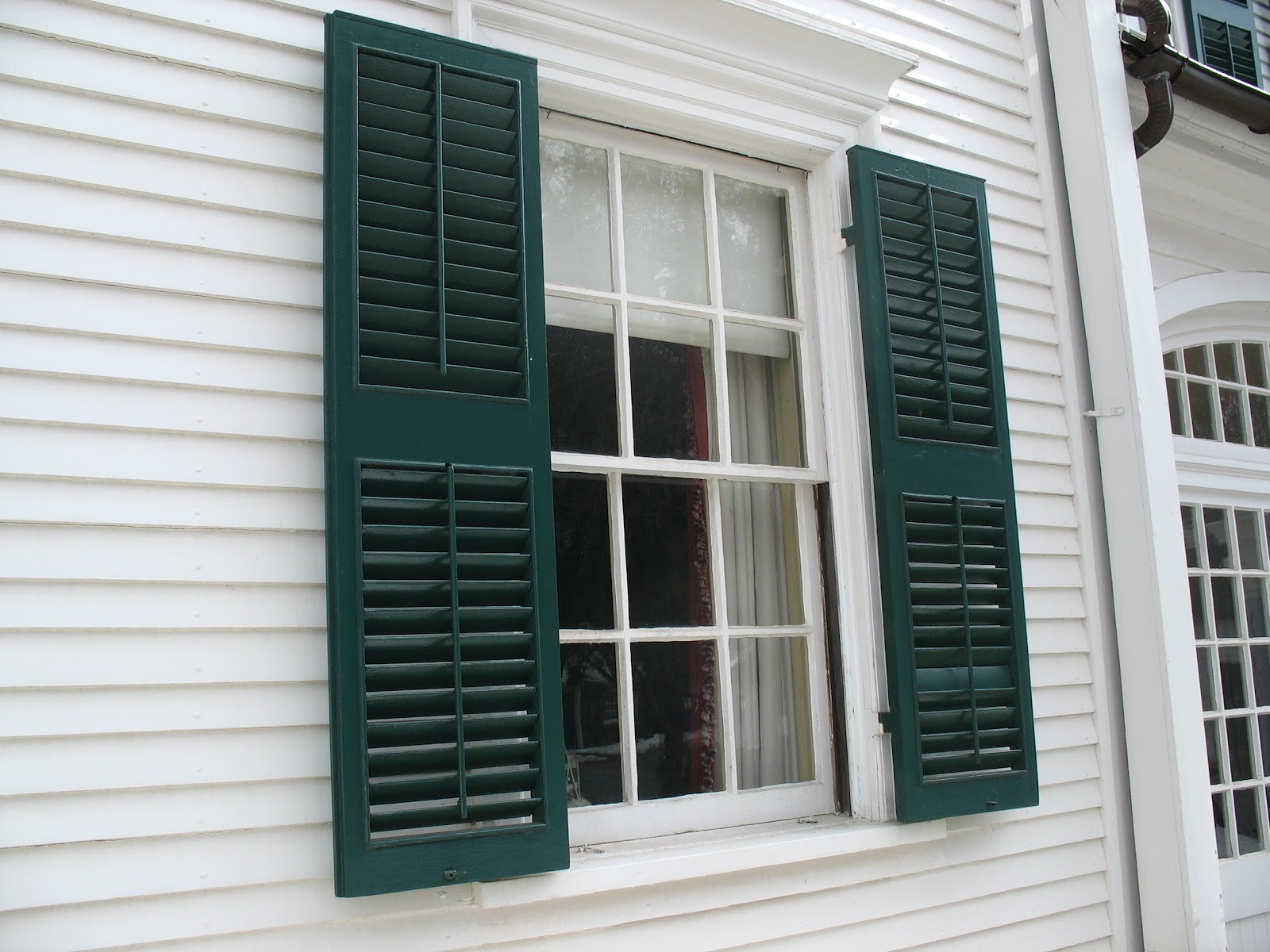
Woodworker removing one of 174 five-foot-high
shutters.  Photo by East West Builders.  Image
courtesy of Hill-Stead Museum, Farmington, CT. 

Pair of restored shutters reattached to the exterior of the newly repainted house.
Photo by Cynthia Cagenello.  Image courtesy of Hill-Stead Museum, Farmington, CT. 


"Fumette" (1858) by James McNeill Whistler
(1834-1903).  Etching, fourth state, from
"The French Set," a series of 12 etchings.
6 3/8 x 4 1/4 in.
Alfred Atmore Pope Collection, Hill-Stead
Museum, Farmington, CT.
Notes from the Editor:  While the building itself is a distinctly American treasure, the collections within the house widen its value to international importance. Theodate’s father Alfred Pope was a smart and discerning collector of art, with a preference for Impressionist paintings and Japanese prints.

Pope traveled throughout the United States and Europe, amassing a collection of important paintings from such artists as Edgar Degas, Édouard Manet, Claude Monet, and Mary Cassatt. He also appreciated European prints, with purchases that included three engravings by Albrecht Dürer and 17 copper plate etchings and lithographs by James McNeill Whistler. Among his Japanese woodblock prints are works by Katsushika Hokusai, Utagawa Hiroshige, and Kitagawa Utamaro—artists among the most acclaimed of the Japanese masters.

"The Sea Monster" (ca. 1498) by Albrecht Durer (1471-1528).
Engraving, 9 15/16 x 7 1/2 in.
Alfred Atmore Pope Collection,
Hill-Stead Museum, Farmington, CT.

"Kneeling Lady with Fan" (1790s) by Kitagawa Utamaro
(1753-1806).  Woodblock print from the series "Seasonal
Poems Composed by Famous Women."
10 7/16 x 15 3/16 in.
Alfred Atmore Pope Collection,
Hill-Stead Museum, Farmington, CT.

Other Recommended Sites:  If you appreciate the architecture of Hill-Stead, you may enjoy visiting some of the other sites which Theodate Pope Riddle designed. The Theodore Roosevelt Birthplace National Historic Site in New York City was reconstructed by Riddle on the site where it was demolished in 1916. Two of her most important commissions were for educational institutions that are still flourishing:  the Avon Old Farms School (Avon, CT) and Westover School (Middelbury, CT).

"Grainstacks, in Bright Sunlight" (1890) by Claude Monet (1840-1926).
Oil on canvas, 23 x 28 inches.
Alfred Atmore Pope Collection, Hill-Stead Museum, Farmington, CT.

Guest author for this entry:  Terry Price

Tour America's History Itinerary
Monday’s destination:  Weir Farm National Historic Site

© 2012 Lee and Terry Price

Thursday, June 28, 2012

Oral History of American Music, Yale University


Visit our Tour Destination: Connecticut page to see the entire tour of the state’s Save America’s Treasures sites.

Aaron Copland (1900-1990), an American composer represented in the
Oral History of American Music collections.
Source:  Wikimedia Commons

Oral History of American Music, Yale University
310 Prospect Street
New Haven, CT

Website:  OHAM
  
The Treasure:  The treasures at the Oral History of Music (OHAM) collections at the Yale University Library are 2,200 audio and video recordings of oral history interviews with great 20th century American composers and musicians.

Accessibility:  The OHAM website lists seven major collections. The first of these, Major Figures in American Music, links to a fairly comprehensive finding aid for researchers. All of the recorded interviews have been transcribed. Summaries of the contents of the oral history recordings are provided on the website for many of the artists represented. Information regarding access to the recorded material and the transcripts is available on the OHAM website. OHAM is open Monday through Friday from noon to 5.

Background:  There is a long history of documenting folk music through the use of sound recordings, particularly in the years immediately following World War II. By 1950, there were already over 10,000 recordings of folk music in the Library of Congress. The invention of the tape recorder in 1950 spurred even more ethnomusicology activity. But emphasis continued to be on performance recordings rather than oral history interviews.

Charles Ives in 1913.
Source: Wikimedia Commons
The OHAM collections began in 1968 with the Charles Ives (1874-1954) oral history project—an ambitious three-year documentary history project shaped around the recorded reminiscences of 60 people closely associated with Ives, each of them interviewed in-depth. The documentation of Ives’ career as an important American composer set a high standard for the many other oral history projects that followed. In the early years, efforts were made to interview established composers in failing health. As time moved on, the pool of American composers and musicians covered by the OHAM collections grew larger and larger.

Although OHAM’s work began with a composer in the classical vein, a wide variety of music styles were quickly welcomed. Ragtime composer Eubie Blake (1887-1983) was interviewed in 1972, encouraged to recall the vaudeville and jazz scenes in the early years of the 20th century. Pioneering jazz pianist Mary Lou Williams, who composed important pieces for Duke Ellington and Benny Goodman, was interviewed shortly before her death in 1981. Famous classical composers like Aaron Copland and Virgil Thomson were interviewed, as well as groundbreaking avant-garde figures like John Cage. The American musical theater was recognized through interviews with luminaries such as Oscar Hammerstein II and Stephen Sondheim. While popular music is less well represented, there are delightful surprises:  for instance, interviews with Les Paul, Quincy Jones, and Frank Zappa.

In addition to the Charles Ives project, other major OHAM projects involve dozens of interviews focused on Paul Hindemith, Duke Ellington, and even the famous piano manufacturing company Steinway & Sons. The Duke Ellington project encompasses 92 interviews with a broad range of friends, relatives, and artists. The depth of material is staggering—an astonishing wealth of material for researchers to explore.

Currently there are approximately 1,000 American composers and musicians represented by oral history interviews in the OHAM collections. These recordings of the voices of composers, musicians, and fellow travelers illuminate the many paths American music has taken in the past century.


Jazz pianist and composer Mary Lou Williams (1910-1981), circa 1946.
Photo by William P. Gottlieb from the collection of the Library of Congress.
Source:  Wikimedia Commons
Duke Ellington conducting from the piano at the
Hurricane Cabaret in 1943.  Photo by Gordon Parks.
Source:  Wikimedia Commons

Virgil Thomson.
Source:  Wikimedia Commons
Notes from the Editor:  The OHAM collection has several podcasts and interview transcripts available online. Among them is an intense conversation excerpt between the classical composer Virgil Thomson (1896-1989) and interviewer Vivian Perlis on the nature of art and inspiration. As a poet and fiber artist (though admittedly no musician), I found this passage in particular to be deeply resonant:

“I like to make it flow from the beginning, because it hangs together much better that way then if you think of a fine finale and how you are gonna to get there, oh? Because it’s much easier in a continuous flow to cut passages where your inspiration is a little weak or where you repeated yourself unnecessarily. It’s much easier to cut than to add. Anyway I like to begin at the beginning and go straight on.”

Elsewhere, he describes the ideal creative situation as “one in which you write it down as it comes to you very rapidly, and those are likely to be––well, the most inspired passages.”

To conclude with some music (seems appropriate!), here’s Virgil Thomson’s “Suite from The River,” a 1938 score that he wrote to accompany a WPA short documentary on the Mississippi River:


Other Recommended Sites:  There’s more music at Yale! On Hillhouse Avenue, visit the Yale University Collection of Musical Instruments. They exhibit musical instruments from antiquity to the present. And in addition to preserving the historic instruments, they celebrate their collections and the world’s music history through an annual concert series and special events.

Also, the Irving S. Gilmore Music Library at Yale University contains the papers, manuscripts, and correspondence of many of the composers represented at OHAM.

Frank Zappa in 1977 at Ekeberghallen, Oslo, Norway.
Source:  Wikimedia Commons

Guest author for this entry:  Terry Price

Tour America's History Itinerary
Thursday (7/12/2011) destination:  Hill-Stead Museum

© 2012 Lee and Terry Price
Tuesday, June 26, 2012

First Congregational Church of Litchfield


Visit our Tour Destination: Connecticut page to see the entire tour of the state’s Save America’s Treasures sites.

The First Congregational Church of Litchfield after the
restoration.  Photo courtesy of the First Congregational
Church of Litchfield.

First Congregational Church of Litchfield
21 Torrington Road
Litchfield, CT


The Treasure:  The First Congregational Church of Litchfield is a quintessential old New England church, beautifully expressing the character of its time.

Accessibility: The exterior can be viewed anytime at 21 Torrington Road in Litchfield. The interior probably looks its best at worship time on Sunday mornings at 10:30.

Background:  Some say it’s the most photographed church building in New England. With its distinctive steeple, fluted columns, and perfect symmetry, the First Congregational Church of Litchfield manages the neat trick of appearing stoically formal and graciously welcoming at the same time. The unadorned interior offers a perfect complement to the promise of the exterior—it’s refreshingly clean and balanced with no ostentatious frills.

Pews and pulpit in the interior of the First Congregational Church
of Litchfield.  Photo courtesy of the First Congregational Church
of Litchfield.
Built in 1829, this building served as its congregation’s third meetinghouse. The first building had been constructed in 1723, just a few years after the first settlers arrived. When the congregation outgrew its first home, a larger one was built in 1761. And then they outgrew that one, too.

Lyman Beecher in a photograph by
Matthew Brady, between 1855 and 1865.
Source:  Wikimedia Commons
Active in Litchfield from 1810 to 1826, Lyman Beecher was the most famous preacher to serve as minister to this congregation. At the time of his arrival, he had already earned a reputation for his sermon concerning the duel between Aaron Burr and Alexander Hamilton. However, his major claim to fame belongs to six sermons on intemperance—drunkenness—that he delivered and published at Litchfield in 1814. These impassioned speeches remained popular and sold well for over 50 years.

But tastes change. In the post-Civil War era, the graceful old meetinghouse fell out of favor. It was in fact considered an eyesore, with Henry Ward Beecher (son of Lyman Beecher, brother of Harriet Beecher Stowe, and a skilled preacher in his own right) pronouncing, “There is not a single line or feature in the old building suggesting taste or beauty.” A fourth church building—this time in the newly-fashionable Victorian Gothic style—was built and the old church building was neglected for over 50 years. In 1930, with Colonial revival movements stirring around the country, the congregation tore down their Victorian Gothic building, returning to their 1829 building. Now renowned for its plain beauty, the First Congregational Church of Litchfield is home to an active United Church of Christ congregation and all are invited to worship every Sunday morning at 10:30.

From a brochure for the restoration--showing the
classic design of the church.
Image courtesy of the First Congregational Church
of Litchfield.

Front facade of the First Congregational Church of
Litchfield during restoration.  Photo courtesy of the
First Congregational Church of Litchfield.

Notes from the Editor:  New England churches built in the two hundred years between 1640 and 1840 often were designed to reflect the beliefs of the Protestant Nonconformists, better known in America as the Puritans. The dignified yet plain meetinghouse of the First Congregational Church of Litchfield is typical of the Puritan style. These Congregational churches were independent, sometimes nurturing social movements such as abolitionism, women’s suffrage, and the temperance movement. It was also typical to call their building a meetinghouse, disdaining the fancy airs associated with the term “church.”

Cotton Mather, a famed American Puritan preacher and historian, had this to say in 1726: “We have modest and handsome Houses for the Worship of God, not set off with Gaudy, Pompous, Theatrical Fineries, but suited unto the Simplicity of Christian Worship.” Anything that smacked of the Roman Catholic Church or the Anglican Church was unacceptable. There were no vestments, candles, or crucifixes at the Litchfield meetinghouse.

Other Recommended Sites:  Litchfield is a historic town. Explore its history through the Litchfield Historical Society, which operates the Litchfield Historical Society Museum and two historic sites, the Tapping Reeve House and the Litchfield Law School.

Restored windows and shutters at the First Congregational Church of Litchfield.
Photo courtesy of the First Congregational Church of Litchfield.

Guest author for this entry:  Terry Price

Tour America's History Itinerary
Thursday’s destination:  Oral History of American Music Archive, Yale University

© 2012 Lee and Terry Price


Friday, June 22, 2012

Sterling Opera House


View Sterling Opera House in a larger map

Visit our Tour Destination: Connecticut page to see the entire tour of the state’s Save America’s Treasures sites.

Exterior of the Sterling Opera House in Derby, Connecticut.
Source:  Wikimedia Commons

Sterling Opera House
1 Elizabeth Street
Derby, CT
  
The Treasure:  A classic 19th century American opera house, the Sterling Opera House stands out for its stunning mix of architectural styles and excellent acoustics.

Accessibility:  The exterior is visible from Elizabeth Street; the interior is currently closed for renovation.

Background:  Opera houses in the United States rarely hosted actual operas. They were cultural and civic gathering places for their communities as well as major landmarks that a town could take pride in. When a celebrity came to town to speak or a traveling theatrical troupe arrived to perform, the opera house would serve as their platform. In Connecticut, few opera houses could boast of a more star-studded history than the Sterling Opera House in Derby.

Built in 1889, the Sterling Opera House remained in operation as a theater for 56 years then continued to be used for other purposes for an additional 20 years. H.E. Ficken designed the opera house, creatively employing a mix of architectural influences. Italian Victorian and Baroque imagery comprised the exterior while Germanic influences pervaded the interior, notably using composer Richard Wagner’s triangular seating arrangement that allows an unobstructed view of the stage for all guests. The Sterling Opera House’s design is truly a cultural melting pot of architecture.

Unrestored balcony in the Sterling Opera House.
Photo courtesy of the City of Derby.
The Sterling Opera House was designed for hosting live theater—with ten dressing rooms, a trapdoor on the stage floor, and an impressive pit for the orchestra—but like most American opera houses, it attracted all sorts of entertainment. Major names to grace the stage include famed composer and conductor John Philip Sousa; master magician Harry Houdini; theatrical legends Lionel, John and Ethel Barrymore; comedian Red Skelton; and even aviatrix Amelia Earhart who came in 1936 to address the local Women’s Club. And of course there were the performances of touring chestnuts such as Uncle Tom’s Cabin, once performed at the Sterling Opera House with heavyweight boxing champion John L. Sullivan as the villainous Simon Legree.

Notes from the Editor:  Derby is 100% committed to bringing the Sterling Opera House back. Serious renovations are taking place. Everything—from the cupola on the roof to the performance equipment inside—is being updated, replaced, or repaired as needed to make the building operational and a centerpiece for the city again. City leaders have embraced the rich history of the building and see the restored opera house as a key ingredient in shaping Derby’s future.

Artistic rendering by MOS, LLC of interior design proposal for the restored
Sterling Opera House.  Image courtesy of the City of Derby.

Artistic rendering by MOS, LLC of interior design proposal for the restored
Sterling Opera House.  Image courtesy of the City of Derby.

Artistic rendering by MOS, LLC of interior design proposal for the restored
Sterling Opera House.  Image courtesy of the City of Derby.

Other Recommended Sites:  While visiting Derby, why not stop by the Osborne Homestead Museum, located next to Osbornedale State Park? Built in the 1800s and remodeled in the 1920s, the impressive estate of Frances Osborne Kellog contains significant collections of antiques, art, and furnishings.

Save America's Treasure signage displayed on the facade of the
Sterling Opera House during the exterior restoration.
  Photo courtesy of the City of Derby.

Guest author for this entry:  Terry Price

Tour America's History Itinerary
Tuesday’s destination:  First Congregational Church of Litchfield

© 2012 Lee and Terry Price

Tuesday, June 19, 2012

Florence Griswold Museum: The Panel Paintings


View Florence Griswold Museum in a larger map

Visit our Tour Destination: Connecticut page to see the entire tour of the state’s Save America’s Treasures sites.

With no other room like it in America, this prized collection of painted doors
and panels quickly became an attraction that lured tourists to the
Griswold House.  "Every stranger within the gates of Lyme wants to see it --
and to see it is to admire it," wrote one observer in 1941.
Photo by Joe Standart, courtesy of the Florence Griswold Museum.

The most elaborate panel is Henry Rankin Poore's The Fox Chase, a long
frieze-like painting above the fireplace that depicts members of the art colony
in a mock fox hunt through the village.  Photo by Joe Standart,
courtesy of the Florence Griswold Museum.

Florence Griswold Museum
96 Lyme Street
Old Lyme, CT


The Treasure:  The painted panels and doors at the Florence Griswold Museum chronicle the work of some of America’s finest impressionists working at the height of the Lyme Art Colony. As the Florence Griswold Museum received two Save America’s Treasures grants, this is the second of two entries (the first treated the Griswold House itself as an American treasure).

Accessibility:  The Florence Griswold Museum is open Tuesday through Saturday from 10 to 5 and Sunday from 1 to 5.

The first door.  Left panel:
"Hound Dog Baying at the
Moon" by Henry Rankin Poore.
Right panel:  "Bow Bridge by
Moonlight" by Henry Ward
Ranger.  Photo courtesy of the
Florence Griswold Museum.
Background:  Henry Ward Ranger started the practice of panel painting at the Griswold House in 1900. During his first summer at the Griswold House, Ranger painted a moody Tonalist landscape within the right side frame of the door to his room. Then he challenged his artist friend Henry Rankin Poore to paint a complementary scene within the left side frame. Poore rose to the challenge, setting an initial very high standard for panel painting at the Griswold House. The practice really took off in 1905 when artist Willard LeRoy Metcalf suggested decorating the dining room with individually painted wooden panels.

Each year, the core artists of the colony issued invitations to selected artists from their group to paint a panel or door at the house. These invitations were considered the highest of compliments and the artists would generally oblige with an inspired contribution (doubtless additionally motivated by competition among the artists to impress the others with the quality of their work).

Henry Ward Ranger and his cluster of friends—the first artists to gather as a fledgling art colony in Old Lyme—were considered Tonalists rather than Impressionists. An art style adopted by important American artists such as George Inness and James McNeill Whistler, Tonalism typically depicted landscapes that were dominated by an overall tone of a dark, neutral color. Their pictures appeared moody and shadowy, sometimes conveying a sense of mystery or spirituality.

Detail of right panel of door painted
by Childe Hassam:  "The Bathers"
(1903), oil on wood door panels.
Image courtesy of the
Florence Griswold Museum.
But the artistic mood at the Griswold House shifted in 1903 with the arrival of Childe Hassam, already established as a leading figure among the American Impressionists. Like the Tonalists, Hassam embraced the local scene—both its landscapes and its architecture. However, unlike the Tonalist works, Hassam’s paintings burst with bright colors and energy. A very strong artist, his celebration of Old Lyme attracted the attention of other talented American Impressionists, some of whom joined Hassam at the emerging art colony. Even the first wave of Tonalist painters fell under the influence of Hassam as they brightened their palettes toward more Impressionist colors.

From 1900 to 1920, the Lyme Art Colony flourished at the Griswold House, with the great majority of the panels dating from this period. Ultimately, more than 30 artists contributed painted panels and doors to the house. Most of the paintings are located in the dining room—where today’s visitors can find themselves completely immersed in the spirit of turn-of-the-century American Impressionism. The Griswold House dining room has been recognized as an American treasure since the early days of the art colony and remains an enchanting celebration of the American landscape, whether shimmering in sunlight or poetically shadowed by moonlight.

"Landscape with Cow" (1907) by Walter Griffin (1861-1935), Childe Hassam
(1859-1935), and Henry Rankin Poore (1859-1940).  Oil on wood panel.
Image courtesy of the Florence Griswold Museum.

"White Cottage in Autumn" by Woodhull Adams (1854-1921).  Oil on
wood panel.  Image courtesy of the Florence Griswold Museum.


"Lyme in Winter" (c. 1914) by Everett Warner (1877-1963).  Oil on
wood panel.  Image courtesy of the Florence Griswold Museum.

Notes from the Editor:  Nourished by their experiences at the Griswold House, the artists at the Lyme Art Colony were inspired to do some of their best work. They would set up the easels on the grounds or go out exploring the town and countryside in search of new views to capture on canvas. Florence Griswold, their gracious host, worked with the artists to convert the various outbuildings into small studios, with the favored artists getting their pick of the finest.

"May Night" (1906) by Willard LeRoy Metcalf.
Corcoran Gallery
Source:  Wikimedia Commons 
One of the most famous paintings to emerge from the Lyme Art Colony was Willard Metcalf’s “May Night.” Metcalf arrived at the Florence Griswold House in the summer of 1905. At the age of 46, he was respected as an artist by his peers but was still awaiting breakthrough recognition. During his second season at the Griswold House, he began experimenting with “nocturnes,” atmospheric nighttime scenes. 

Painted in spring 1906, “May Night” depicted two women on the grounds of the Griswold estate at night, with the front porch memorably bathed in moonlight. Metcalf offered Florence Griswold the painting in lieu of rent, but she insisted that the painting was too valuable for her to accept. She reportedly said, “It’s the best thing you’ve ever done. When you show it in New York, they’ll snap it up at once, and everything will be lovely.”

Florence Griswold’s instincts were soon proven right. “May Night” was awarded First Prize and Corcoran Gold Medal at the Corcoran Gallery’s inaugural exhibition of contemporary art in 1907, and it became the Corcoran Gallery’s first-ever purchase of a contemporary American painting. “May Night” continues to be regarded as a masterpiece of American Impressionism, one of the great treasures of the Corcoran Gallery, and an iconic image that magically captures the Griswold House mystique.

Other Recommended Sites:  Paintings by the American Impressionists of the Lyme Art Colony are well represented in museums throughout the country. They are some of the finest examples of American Impressionism, as well as charming evocations of the beauty of rural New England.

As noted above, “May Night” by Willard Metcalf is at the famous Corcoran Gallery in Washington, DC. While visiting Washington, you can find other major collections of American Impressionism at the Phillips Collection (Washington, DC) and the Smithsonian American Art Museum (Washington, DC). In Connecticut, the New Britain Museum of American Art (New Britain, CT) has a fine selection of works by the American Impressionists.

Since I live in the Philadelphia region, I’ll make a special shout-out for a different art colony—the Pennsylvania impressionists of the New Hope School who were flourishing at the same time as their counterparts in Old Lyme. The James A. Michener Art Museum (Doylestown, PA) has a remarkable collection of works by Pennsylvania Impressionists, including major pieces by Edward Redfield and Daniel Garber.

"Florence Griswold House" (1905) by Will Howe Foote (1874-1965).
Oil on wood panel.  Image courtesy of the Florence Griswold Museum.

Tour America's History Itinerary
Friday’s destination:  Sterling Opera House

© 2012 Lee and Terry Price